


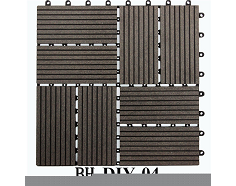


Composite Decking Supplier
Composite decking is a type of decking material that is made from a combination of wood and plastic fibers or polyethylene. It is often used as an alternative to natural wood decking because it is low maintenance and durable.
Composite decking is resistant to rot, mold, mildew, and insects, making it a popular choice for outdoor decks and patios. It also comes in a variety of colors and finishes, allowing homeowners to customize their decking to match their home's exterior.
Composite Decking Products


Can You Put Composite Decking on Concrete?
Yes, you can install composite decking on concrete. Concrete patios and other hard surfaces are an ideal place to lay deck tiles because they are stable and durable. Concrete provides a more stable surface for composite decking, compared to surfaces such as gravel or sand. Installing decking directly over dirt or grass isn't recommended. In addition to increased stability, there are several reasons it's a good idea to install deck tiles on top of concrete
A quicker installation process: A pre-existing solid base cuts installation time in half, as there is no need to pour or install a base before beginning deck installation.
You can hide old concrete: If your concrete patio is cracked, discolored or showing signs of wear and tear, you do not have to worry about removing and re-pouring concrete. Instead, cover your patio up with stylish, long-lasting composite deck tiles.
It is the perfect way to refresh your space: Give your outdoor space a refresh or prepare it for the housing market with composite tile decks. While a concrete patio is practical, it lacks the personality, style and easy maintenance that comes with composite decking.
Composite deck tiles are easy to maintain: Are you tired of repairing, painting or refinishing cracked or discolored concrete. Installing composite decking over concrete is a low-maintenance solution.
It is easier to customize: Composite deck tiles are available in many different colors and patterns, making it easier than ever to showcase your personality. Choose a classic, subtle look, or go bold with alternating colors and patterns.
No more weeds: When you install composite deck tiles on a pre-existing concrete patio, you do not have to worry about weeds or plants sprouting from under your tiles.
Concrete is drier: Compared to installing composite deck tiles on ground-up gravel or compacted sand, concrete provides a dry, moisture-free base.
Applications of Composite Decking
Decks and patios: Composite decking is a popular choice for decks and patios due to its durability and low maintenance requirements.
Pool decks: Pool decks need to be slip-resistant, durable, and able to withstand the harsh chemicals and water exposure. Composite decking is a great material for pool decks because it is slip-resistant and non-porous, preventing water damage and mold growth.
Docks and marinas: Composite decking is an ideal material for docks and marinas due to its resistance to water, rot, and insects. It is also slip-resistant, making it a safe choice for areas exposed to water.
Walkways and boardwalks: Composite decking is a great material for walkways and boardwalks due to its durability and resistance to weather and wear. It is also environmentally friendly and easy to maintain.
Outdoor furniture: Composite decking materials can be used to create outdoor furniture such as benches, tables, and chairs. These pieces are durable and resistant to weather, making them a great investment for outdoor living spaces.
Commercial applications: Composite decking is used in a variety of commercial applications, including restaurants, hotels, and retail spaces. It offers a low-maintenance solution for outdoor spaces that need to withstand high traffic and exposure to the elements.
Balconies and rooftops: Composite decking can be used for balcony and rooftop installations, providing a durable and low-maintenance solution for outdoor living spaces in urban areas. It is also slip-resistant, making it a safe choice for high-rise buildings.


Types of Composite Decking
The three types of composite decking are solid, hollow and capped
Solid
These composite decking are heavy, strong and durable. They more closely resemble wood and are common as swimming pool decks, pathways to homes and permanent flooring in hotels, homes and offices. However, solid composite decking boards might expand and contract under extreme weather conditions.
Hollow
Also known as blank composite boards, these lightweight boards are less resistant to impacts and require caps on their edges. They look less like natural wood than solid composite boards, so professionals use them to install cables, siding and cladding.
Capped
Capped composite decking boards feature a core and a cap. The core is a wood by-product and recycled plastic mixture, while the cap is a synthetic material that increases stain and scratch resistance and helps prevent discoloration. These composite boards are an excellent choice for decks, swimming pools, garden areas and much more.
What Should Be Considered When Choosing Composite Decking?
Melting potential
Since composite decking uses recycled plastic, it can melt under rare circumstances. For instance, if you spill hot grease or coals on the surface. Aside from melting, increased heat can cause the decking to become more flexible and move out of its fasteners. The boards can also be hot to the touch during hot summers. Choosing a lighter color for the deck can help prevent this.
Cost
The final cost of composite decking on the options, styles and features you choose, but most composite decks cost more than pressure-treated wood. However, the lower maintenance costs will offset the upfront cost over time.
Weight
Composite decking weighs more than natural wood, so it requires a sturdier frame. This means the structural support must be wood, not composite decking.
Hidden fasteners
While their durability and clean look make them an advantage, hidden fasteners can also be a disadvantage. If you need to replace a board, you'll have to disconnect it underneath, which may require you to detach multiple boards.
How to Solve the Problem of Bending Deformation in the Extrusion of Composite Decking?


Bending deformation of Composite decking is a common problem in the extrusion process, and its causes are mainly: Uneven discharge of material from the mouth die, inadequate cooling of materials and inconsistent post-shrinkage when cooling and shaping, equipment and other factors.
- Ensure the concentricity and level of the whole line of the extruder, and correct the concentricity and level of the extruder, mouth die, sizing die and water tank at each die change.
- Assemble the mouth die carefully before starting the machine to make the gap of each part consistent. If the uneven material discharge from the mouth die is found when starting the machine, adjust the temperature of the mouth die according to the bending and deformation direction of the billet to ensure the uniform material discharge from the mouth die, if adjusting the temperature of the mouth die is not effective, the plasticization degree of the material can be increased appropriately.
- Adjust the cooling system of the shaping mold and increase the cooling water on the side of the profile bearing tensile stress.
- Adjust the method of mechanical offset center, that is, while producing, adjust the positioning bolt in the middle of the shaping mold, and make reverse micro adjustment according to the direction of profile bending (the method should be adopted with caution, and the adjustment amount should not be too large).
- Pay close attention to the working quality of the mold, pay attention to the maintenance of the mold, and maintain and repair the mold at any time according to the actual situation.
FAQ
Q: Is composite decking better than real wood?
Q: What's the difference between composite decking and normal decking?
Q: What is the lifespan of composite decking?
Q: Can you put a grill on a composite deck?
Q: Is a composite deck worth the money?
Q: How long does composite decking last?
Q: Which is better cedar or composite decking?
Q: Is composite decking slippery when wet?
Q: How often do you need to clean a composite deck?
Q: Does composite decking get really hot?
Q: Will a fire pit melt composite decking?
Q: Can you lay composite decking on a patio?
Q: Why is composite decking so expensive?
Q: Can you ruin composite decking?
Q: Do dogs slip on composite decking?
Q: Is it OK to pressure wash composite deck?
Q: Which composite decking is best for full sun?
Q: Is patio more expensive than composite decking?
Q: Will composite decking fade in the sun?
Q: What animal chews on composite decking?
Bohan Electronic is one of the largest composite decking manufacturers and suppliers in China. If you are looking for high quality composite decking, don't hesitate to wholesale the product with our factory any more. They are designed and manufactured by the most professional staff, you can rest assured to buy.
wpc fencing rails, women s accessories, sustainable wall panels , marine deck , composite slats , engineered wood floor , laminate floor , decking tiles